Description
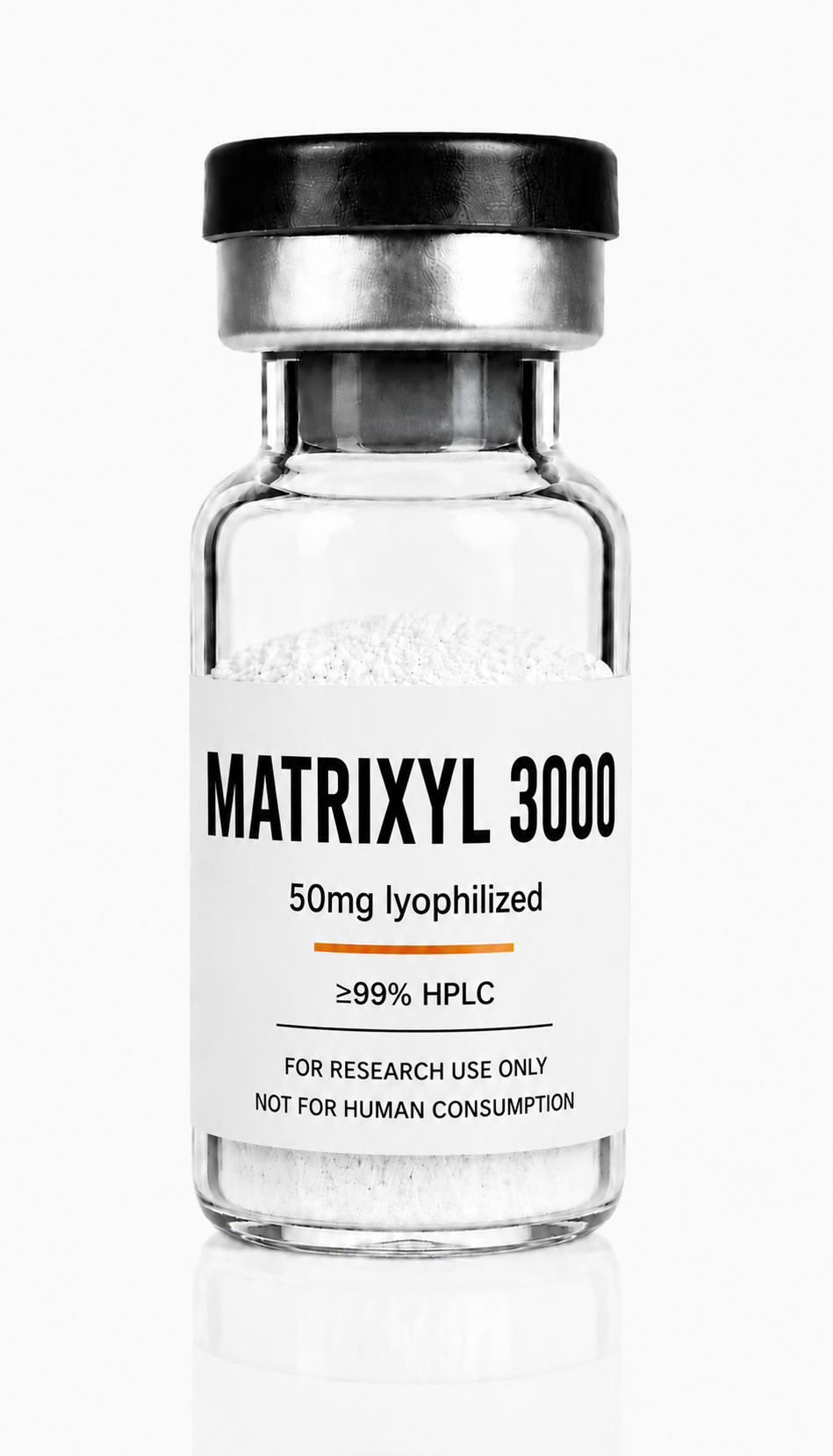
Matrixyl 3000 – 50mg: Lab-Grade Research Peptide

Matrixyl 3000 – 50mg is a lab-grade peptide blend intended strictly for laboratory research use. At VialPepLab, this product is offered for researchers studying research peptides, collagen-support pathways, extracellular matrix signaling, fibroblast activity, and peptide formulation stability. The vial is supplied as a lyophilized powder with batch-specific peptide COA verification and HPLC purity.
Why Choose Matrixyl 3000 – 50mg
Matrixyl 3000 combines two palmitoylated peptides: Palmitoyl Oligopeptide and Palmitoyl Tetrapeptide-7. It is widely used in lab-grade peptide research for dermal models, anti-aging studies, fibroblast activation, and cosmetic peptide formulation. This peptide is ideal for labs in the USA and Canada looking to buy research peptides USA or buy research peptides Canada for controlled in vitro studies.
Key Benefits
- Supports collagen synthesis in skin tissue models
- Enhances extracellular matrix research
- Ideal for cosmetic peptide formulation testing
- Lyophilized powder ensures storage stability
- Batch-specific peptide COA documentation included
- HPLC verified peptides for laboratory quality assurance
- For laboratory research use only
Matrixyl 3000 – 50mg Features
Dual-Peptide Composition
This blend includes Palmitoyl Oligopeptide and Palmitoyl Tetrapeptide-7. These peptides are studied for cosmetic peptide research, extracellular matrix modeling, and skin biology studies. For additional references, visit the PubMed research database.
Collagen Research Support
Matrixyl 3000 – 50mg helps researchers examine collagen expression, fibroblast activity, and dermal tissue integrity. It is commonly included in research alongside other research peptides like BPC-157 and TB-500.
Cosmetic Formulation Testing
Suitable for in vitro formulation studies, stability tests, and ingredient compatibility assessment, allowing researchers to explore peptide-based skin repair compounds.
Lyophilized Format
The lyophilized powder ensures long-term stability when stored sealed, dry, and cold, protected from light. Proper lyophilized peptide storage temperature is essential to maintain peptide integrity and reproducibility in research protocols.
Research Applications
- Skin biology and regeneration research
- Fibroblast and collagen pathway studies
- Extracellular matrix remodeling experiments
- Anti-aging peptide studies
- Cosmetic peptide formulation testing
- Peptide stability and reconstitution experiments
How to Reconstitute Matrixyl 3000
Matrixyl 3000 – 50mg should be reconstituted using a proper peptide reconstitution protocol. Sterile water or bacteriostatic water for peptides is recommended depending on the research requirements.
Formula:
Concentration (mg/mL) = Peptide mass (mg) ÷ Reconstitution volume (mL)
Example: 50mg vial in 10mL produces 5mg/mL solution. For detailed instructions, visit Calculating Reconstitution Concentrations. For general solution guidance, see Sigma-Aldrich Solution Calculator.
Storage Guidelines
- Lyophilized: sealed, dry, protected from light
- Store at –20°C for long-term stability
- Reconstituted: 2–8°C, sterile handling, use promptly
- Avoid repeated freeze-thaw cycles
- Label aliquots with concentration and date
Quality Assurance
Each batch includes a Certificate of Analysis verifying HPLC purity, identity confirmation, and peptide integrity. For verification, see LC-MS Identity Confirmation Guide.
Internal and Category Links
Browse additional lab-grade peptides in our Healing & Regeneration category for more research peptides and HPLC verified compounds. Also explore our Cosmetic Peptides category to compare product specifications, peptide COA, and storage guidance.
External References
For peer-reviewed research on Matrixyl 3000 and cosmetic peptides, visit the PubMed research database. For general peptide handling guidelines, see Sigma-Aldrich.
FAQs
What is Matrixyl 3000 – 50mg used for?
It is used in lab research for collagen support, fibroblast activity, extracellular matrix studies, and cosmetic peptide formulation.
Which peptides are included?
Palmitoyl Oligopeptide and Palmitoyl Tetrapeptide-7.
How should it be stored?
Lyophilized: sealed, dry, cold, protected from light. Reconstituted: 2–8°C, sterile handling, avoid freeze-thaw cycles.
Is it for human use?
No. Strictly for laboratory research only.
Reviews
There are no reviews yet.