Description
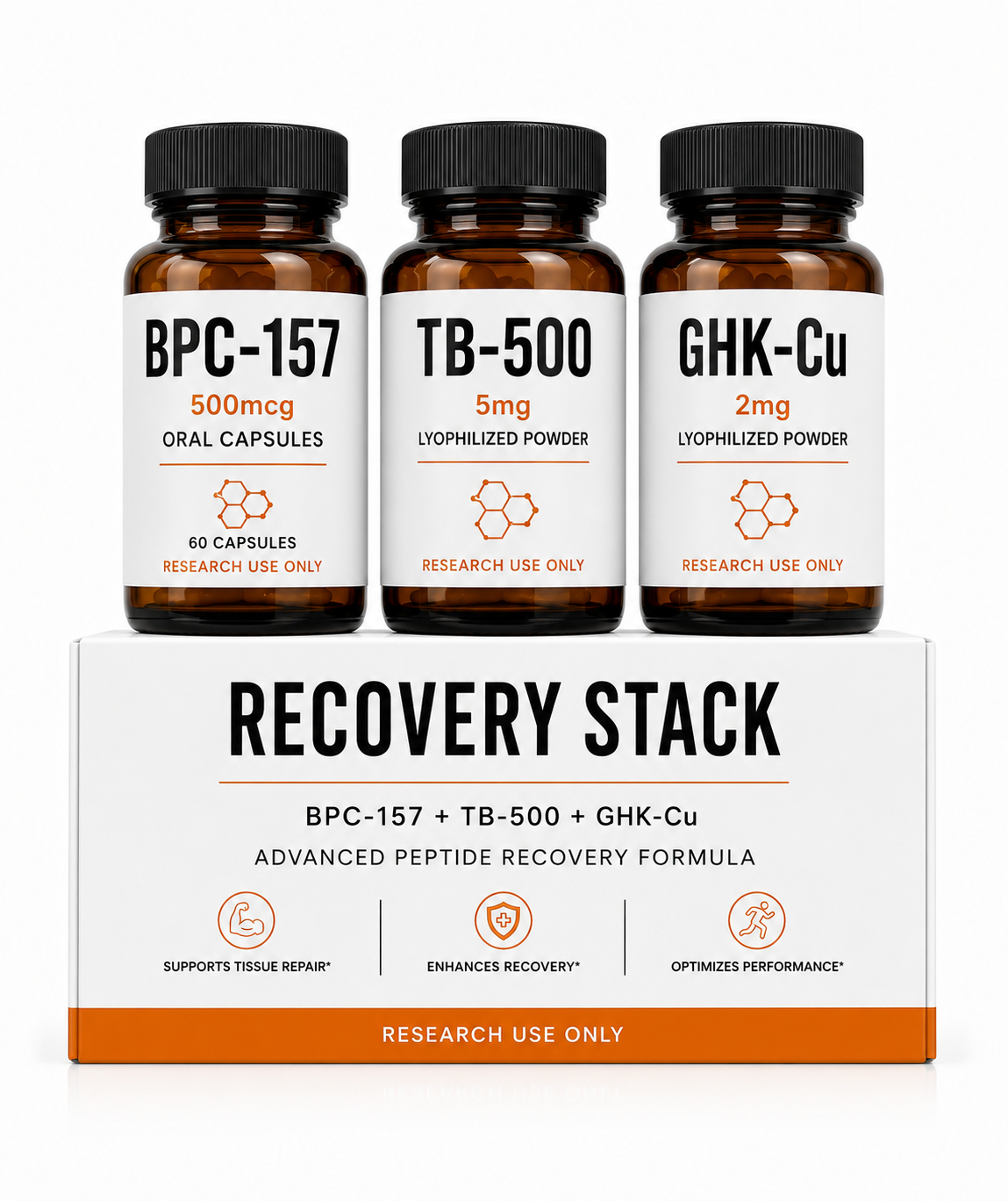
Recovery Stack BPC-157 + TB-500 + GHK-Cu: Premium Research Peptide Stack

Recovery Stack BPC‑157 + TB‑500 + GHK‑Cu is a premium lab‑grade research peptide blend supplied by VialPepLab for laboratory research use only. This stack combines three well‑studied peptides — BPC‑157, TB‑500, and GHK‑Cu — for comparative research in peptide signaling pathways, receptor interactions, cellular communication, analytical response evaluation, and regeneration models.
Researchers looking for high‑quality research peptides, lab‑grade peptides, HPLC verified peptides, and batch‑specific peptide COA documentation can use this page to review product specifications, reconstitution guidance, storage protocols, and research‑only notes.
What Is the Recovery Stack BPC-157 + TB-500 + GHK-Cu?
The Recovery Stack BPC‑157 + TB‑500 + GHK‑Cu combines three peptide compounds widely used in laboratory research:
- BPC‑157 — studied for peptide signaling and regeneration models
- TB‑500 — a thymosin beta‑4 fragment frequently used for actin interaction and signaling pathways
- GHK‑Cu — a copper peptide investigated for cellular modulation and analytical receptor studies
Researchers can explore published literature through the PubMed peptide research database.
Recovery Stack Research Benefits
- Comprehensive research peptide stack
- Designed for signaling and receptor interaction studies
- Supports cellular communication and analytical protocols
- Batch‑specific peptide COA documentation included
- HPLC verified peptide purity assurance
- Suitable for comparative peptide research
- For laboratory research use only
Product Features
Multi‑Peptide Research Stack
This blend combines BPC‑157, TB‑500, and GHK‑Cu in one product to support comparative peptide signaling studies, analytical receptor models, and stack performance evaluation.
Lyophilized Powder Format
This stack is supplied as a lyophilized powder to ensure longevity during storage and controlled reconstitution for research protocols.
Research‑Only Designation
This product is strictly for laboratory research use. It is not intended for human use, veterinary use, diagnosis, treatment, injection, consumption, or personal application.
Recovery Stack Research Applications
- Peptide signaling comparison studies
- Receptor interaction and analytical evaluation
- Cellular communication pathway research
- Regeneration and actin interaction models
- Analytical peptide behavior and response analysis
- Laboratory methodology development
How to Reconstitute Recovery Stack BPC-157 + TB-500 + GHK-Cu
Reconstitution should follow your laboratory protocol with sterile technique. Confirm batch‑specific peptide mass and COA documentation before preparing solutions.
Concentration (mg/mL) = Peptide mass (mg) ÷ Reconstitution volume (mL)
Example: Reconstituting 20mg total in 4mL results in a 5mg/mL combined solution. Adjust solvent volumes as needed for research design.
For detailed reconstitution guidance, read our Calculating Reconstitution Concentrations Guide or use the Sigma‑Aldrich solution dilution calculator.
Bacteriostatic vs Sterile Water Considerations
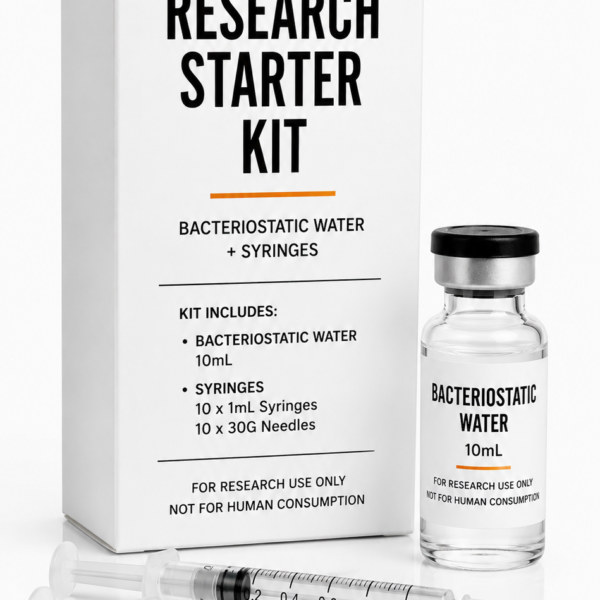
Bacteriostatic water contains a preservative and is often used in multi‑withdrawal research reconstitution protocols; sterile water without preservatives is typically used for single‑use preparation. Always follow lab protocols when choosing a solvent. Read our Bacteriostatic vs Sterile Water Comparison.
Storage and Handling Best Practices
- Store lyophilized stack sealed and dry
- Protect from light and moisture
- Keep cold for long‑term stability
- Use sterile technique after reconstitution
- Avoid repeated freeze‑thaw cycles
- Label aliquots with concentration, batch number, and date
For additional storage guidance, visit our Lyophilized Peptide Storage Guide.
Quality Assurance and Peptide COA
Every batch of the Recovery Stack includes HPLC verified purity data and batch‑specific peptide COA documentation. Researchers should confirm identity, purity, retention time, and storage conditions before laboratory use. For analytical validation techniques, see our LC‑MS Identity Confirmation Guide.
Browse Relevant Peptide Categories
Explore additional peptide research compounds in the Regenerative Peptides category, stack collections, and signaling peptide groups. These categories are useful for comparative research design and study planning.
Related Research Peptides
Researchers interested in peptide stack comparison may also review BPC‑157 10mg, TB‑500 10mg, and GHK‑Cu 50mg.
Research Peptides USA and Canada
Researchers looking to buy research peptides USA or buy research peptides Canada should choose vendors that provide research‑only labeling, peptide COA documentation, HPLC verified peptides, transparent product specifications, and no therapeutic claims. For compliance context, read our Research Peptides Legality US and Canada Guide.
Product Specifications
- Product name: Recovery Stack BPC‑157 + TB‑500 + GHK‑Cu
- Peptide type: Research peptide stack
- Format: Lyophilized powder
- Amount: Total stack (e.g., 20mg)
- Category: Regenerative & Signaling Peptides
- Use: Laboratory research only
- Documentation: Batch‑specific peptide COA
Important Research‑Only Notice
The Recovery Stack BPC‑157 + TB‑500 + GHK‑Cu is sold strictly for laboratory research use only. It is not for human use, veterinary use, diagnosis, treatment, injection, consumption, or personal application.
Frequently Asked Questions
What is the Recovery Stack BPC‑157 + TB‑500 + GHK‑Cu used for in research?
It is used in laboratory settings involving comparative peptide signaling research, receptor interaction protocols, cellular communication studies, receptor pathway analysis, and analytical peptide evaluation.
Does this stack include COA documentation?
Yes. Each batch includes batch‑specific peptide COA documentation and HPLC verified peptide quality verification.
Is this product for human use?
No. This product is strictly for laboratory research use only and is not intended for human or veterinary applications.
Order Recovery Stack BPC‑157 + TB‑500 + GHK‑Cu
This research peptide stack is suitable for laboratories studying signaling pathways, receptor interaction models, peptide communication protocols, analytical evaluations, and comparative studies. Browse additional products in the Regenerative Peptides category or visit vialpeplab.com for more lab‑grade research peptides.
Reviews
There are no reviews yet.